

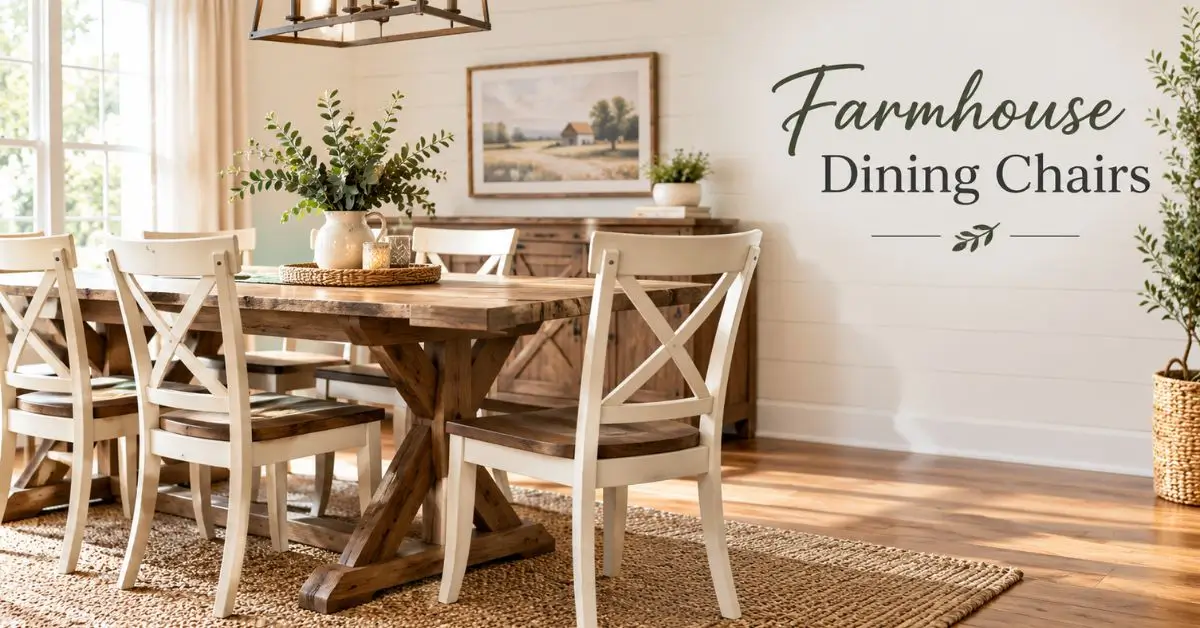
Farmhouse Dining Chairs
Choosing the right seating for your dining table is often harder than picking the table itself. You want chairs that look beautiful and fit your overall home aesthetic, but you also need them to be comfortable enough for long family dinners, homework sessions, and holiday gatherings. Many buyers end up with chairs that wobble after six months, are painful to sit on, or do not fit under their table apron.
Your dining room is one of the hardest working areas in your home. Investing in the wrong seats leads to daily frustration, poor posture, and wasted money.
Farmhouse dining chairs are sturdy, practical seating pieces characterized by simple wooden construction, timeless silhouettes, and rustic charm. Drawing inspiration from classic rural homes and historic European designs, these chairs combine natural materials, neutral finishes, and functional craftsmanship to create a warm, inviting dining space that stands up to daily household use.
In this comprehensive guide, you will learn about the most popular styles, exact sizing rules, material choices, and simple ways to mix and match different seating options around your table.
Quick Summary
Measure your table height before buying. Leave at least 10 to 12 inches between the chair seat and the table bottom. Pick solid woods like oak or rubberwood for everyday durability. If you want extra comfort, choose cross-back or upholstered host chairs, and add tie-on seat cushions to solid wood seats.
What Defines Farmhouse Style Seating?
Farmhouse design has evolved significantly over the years. It is no longer limited to distressed white paint and rooster motifs. Today, it represents a clean, grounded blend of traditional craftsmanship, natural textures, and casual comfort.
The beauty of this style lies in its utility. Historically, furniture on working farms had to be strong, easy to clean, and built from local timber. Modern interpretations keep those functional roots while offering refined finishes and ergonomic support.
Whether your home leans toward modern farmhouse, traditional country, or industrial rustic, the right chairs act as an anchor. They soften modern spaces with warm wood grain and bring character into open-concept floor plans.
The 5 Most Popular Farmhouse Chair Styles
Understanding the classic silhouettes helps you choose a look that complements your dining table and fits your everyday lifestyle.
1. Windsor Chairs
The Windsor chair is an absolute classic with roots dating back to the 18th century. It features a solid wooden seat with multiple turned spindle rods creating the backrest, capped by a curved bow or hoop top.
- Best for: Traditional, colonial, and Scandinavian-modern dining spaces.
- Pros: Visually lightweight, easy to wipe down, and extremely sturdy due to joined leg stretchers.
- Cons: Firm wooden seat that usually requires a cushion for long meals.
2. Cross-Back (X-Back) Chairs
Originally used in French bistros, the cross-back chair has become a staple in modern country homes. It features two curved metal or wooden straps that cross across the backrest, often paired with a woven rattan or solid wood seat.
- Best for: French country, coastal, and transitional farmhouse rooms.
- Pros: Comfortable back support that curves with your spine; pairs easily with nearly any table style.
- Cons: Woven rattan seats can fray over time if exposed to heavy moisture or pets.
3. Ladder-Back Chairs
Ladder-back chairs feature tall, straight vertical posts connected by several horizontal wooden slats resembling a ladder. They often come with woven rush seats or flat wood bottoms.
- Best for: Early American, Shaker, and classic rustic dining rooms.
- Pros: Tall backrests create visual height in rooms with standard or low ceilings.
- Cons: The upright angle can feel stiff if you prefer leaning back after meals.
4. Spindle and Slat-Back Chairs
These chairs offer clean, vertical lines with straight wooden slats running from the seat up to the top rail. They provide a streamlined, honest silhouette that fits minimalist homes.
- Best for: Modern farmhouse, craftsman, and transitional interiors.
- Pros: Highly versatile; easy to find in matching sets or singles.
- Cons: Dust can collect between the lower spindle joints.
5. Upholstered and Slipcovered Chairs
For ultimate comfort, upholstered chairs feature padded seats and backs wrapped in neutral linen, cotton canvas, or performance fabric. Slipcovered versions allow you to remove the entire fabric cover for washing.
- Best for: Formal dining spaces or end-of-table host seating.
- Pros: Superior comfort for long gatherings; adds softness to room full of hard surfaces.
- Cons: Requires more maintenance to keep fabric free of food stains.
Selecting the right silhouette among these popular farmhouse dining chairs ensures your dining room matches your style while meeting your practical seating needs.
Critical Dimensions: Sizing and Space Planning
The biggest mistake homeowners make is buying chairs without calculating clearances. A chair that is two inches too tall or wide will make your entire dining area feel cramped.
       [ Table Top Surface ]
               |
         10-12 inches (Clearance)
               |
        [ Chair Seat Height (18") ]
               |
          Floor Level
1. Seat Height vs. Table Height
Standard dining tables stand between 28 and 30 inches tall. To sit comfortably, you need 10 to 12 inches of clearance between the top of the chair seat and the underside of the table top.
- Standard dining chair seat height: 18 inches from floor to seat.
- Counter-height stool seat height: 24 to 26 inches (for 36-inch counters).
- Bar-height stool seat height: 28 to 30 inches (for 42-inch counters).
Always measure from the bottom of the table apron (the wooden frame beneath the tabletop), not just the top surface. A thick apron can pinch your thighs if the chair seat is too high.
2. Chair Width and Table Spacing
To prevent your guests from bumping elbows, allow 24 inches of table width per person. For example:
- A 72-inch table comfortably fits 3 standard chairs on each long side (6 chairs total, or 8 with host chairs at the ends).
- An 84-inch table easily accommodates 4 chairs per side.
Leave at least 2 inches of space between adjacent chairs and 36 inches of clearance between the back of the chair and the nearest wall or piece of furniture so people can pull their seats out easily.
Material Comparison and Durability
The material of your chair dictates how long it lasts, how it handles spills, and how much daily maintenance it requires.
| Chair Material | Average Lifespan | Cleanability | Comfort (Unpadded) | Ideal Household Type |
|---|---|---|---|---|
| Solid Oak or Ash | 15+ Years | Very High (Wipe clean) | Moderate | Busy families with children and pets |
| Solid Rubberwood / Pine | 7 to 10 Years | High (Wipe clean) | Moderate | Budget-conscious buyers |
| Powder-Coated Steel / Metal | 15+ Years | Excellent | Low | High-traffic kitchens, rentals |
| Woven Rattan / Rush | 5 to 8 Years | Medium (Vacuum gently) | High | Adults, low-moisture dining rooms |
| Performance Fabric Upholstery | 8 to 12 Years | High (Spot clean) | Very High | Entertaining-focused homes |
Solid Hardwoods vs. Softwoods
Hardwoods like white oak, ash, and maple are dense, heavy, and resistant to dents. They handle heavy daily use with ease. Softwoods like pine are lighter and more affordable, but they will show character dings and scratches faster.
Metal and Mixed Materials
Chairs made with powder-coated steel or iron frames combined with wood seats offer outstanding structural strength. They bring a subtle industrial edge to a farmhouse dining table and never suffer from loose wooden joints.
How to Mix and Match Chairs Like a Pro
You do not need to buy a matching set of eight identical chairs. In fact, mixing complementary seating styles creates a more collected, designer-level look.
Here are three reliable styling formulas that work every time:
Formula 1: The Host Chair Strategy
Use matching wooden or cross-back side chairs along the long sides of the table, and place two comfortable upholstered armchairs at the heads of the table. This anchors the room and breaks up large expanses of wood.
Formula 2: The Two-Tone Wood and Paint Contrast
If your dining table has a natural oak or warm walnut wood finish, choose chairs painted in matte black, off-white, or sage green. This contrast keeps the wood tones from blending together into a flat brown look.
Formula 3: The Dining Bench Combo
Place classic wooden farmhouse dining chairs along one side of the table and a matching wooden bench on the other side. This is an excellent solution for families with young kids, and it allows you to tuck the bench fully under the table when not in use to save space.
Comfort Upgrades for Solid Wood Chairs
Wooden seats are durable and easy to keep clean, but they can feel hard after sitting for more than 45 minutes. You can easily make solid chairs more comfortable without sacrificing their classic look.
- Add Tie-On Boxed Cushions: Choose 2-inch thick foam cushions covered in textured linen, cotton duck, or ticking stripe fabric. Tie-on straps keep them securely anchored to spindle or cross-back frames.
- Use Non-Slip Gripper Pads: If your chairs lack posts for ties, look for cushions with rubberized silicone backing that stays in place on smooth wood surfaces.
- Drape Faux Sheepskin Pelts: For colder months, draping a soft sheepskin pelt over the back and seat of a Windsor chair adds texture, warmth, and cozy rustic character.
Real-World Example: Sizing Seating for an Indiana Dining Room
To see how these sizing rules apply in practice, consider a family of five in Noblesville, Indiana. They purchased an 84-inch long, 36-inch wide reclaimed pine trestle table with a 2-inch drop apron.
Here is how they selected and arranged their seating:
- Side Seating: They selected six black spindle farmhouse dining chairs (three on each long side). Each chair measured 19 inches wide, leaving roughly 3 inches between seats and 4 inches at the corners.
- Seat Clearance: The table stood 30 inches tall with a 2-inch apron, leaving 28 inches of under-table clearance. The chairs had an 18-inch seat height, providing a comfortable 10-inch thigh gap.
- Host Seating: At the two ends, they added slipcovered dining armchairs in a washable oat-colored linen fabric to soften the black wood spindles.
- Total Budget: The entire seating set was assembled for under $850 by purchasing the side chairs in pairs online and sourcing the host chairs from a local home outlet.
This layout allowed the family to comfortably seat eight people for holiday meals while maintaining plenty of walking clearance around the dining room perimeter.
Care and Maintenance Guide
Quality dining chairs can last for decades with basic preventative care. Follow these simple steps to keep your seating in top condition.
Tighten Leg Hardware Annually
Most modern dining chairs ship flat-packed with bolt-and-washer assembly. Over months of shifting weight, these bolts naturally loosen. Once every year, turn your chairs upside down and tighten the hex bolts firmly. This prevents joint wobble and protects the chair legs from snapping.
Protect Hardwood Flooring
Never let metal or bare wood chair feet scrape directly against hardwood or luxury vinyl floors. Attach heavy-duty adhesive felt pads to the bottom of each leg. Check the pads every six months and replace them when they collect pet hair or wear thin.
Cleaning Finished Wood Surfaces
Dust chairs weekly with a dry microfiber cloth. For sticky spills, wipe with a damp cloth dipped in warm water with a single drop of mild dish soap, followed immediately by a dry towel. Avoid silicone-based furniture sprays, which leave a gummy film that attracts dirt over time.
Pros and Cons of Farmhouse Seating
Before making a purchase, weigh these honest advantages and trade-offs to ensure this style fits your household.
Pros:
- Timeless Appeal: Classic silhouettes like Windsor and cross-back chairs never go out of style.
- Easy Maintenance: Solid wood and metal designs wipe clean in seconds, making them ideal for kids.
- High Versatility: Easily transitions between country, modern, coastal, and transitional interiors.
- Modular Sourcing: You can buy pieces individually over time rather than committing to expensive full sets.
Cons:
- Firm Seating: Unpadded wood seats lack the built-in plushness of fully cushioned chairs.
- Weight: Solid hardwood chairs can be heavy to slide in and out for small children.
- Wood Wear: Soft pine finishes will show small dents and surface wear over years of heavy use.
Frequently Asked Questions
What is the most comfortable type of farmhouse dining chair?
Upholstered or slipcovered farmhouse dining chairs with padded seats and supportive backrests are generally the most comfortable for long meals.
How much weight can wooden dining chairs hold?
Most standard wooden dining chairs support about 250–300 pounds, while heavy-duty models may support 350–500 pounds. Always check the manufacturer’s weight rating.
Should dining chairs match the dining table?
No, dining chairs do not have to match the table. Mixing wood, painted, or metal chairs can create a balanced and stylish farmhouse look.
How do I stop dining chairs from scratching the floor?
Attach felt pads or silicone floor protectors to the bottom of each chair leg. Replace worn pads regularly to prevent trapped dirt from scratching the floor.
Can I mix metal and wood chairs around the same table?
Yes, metal and wood chairs can be mixed successfully around the same table. Keep the colors or finishes coordinated to create a cohesive look.